To close out the thought from Shaping the Beast ...how would the Music Academy in Madras use design to discourage people from leaving during the Mangalam?
Here are five free suggestions. Without my usual consulting fee of $350 per hour :)
1. Lighting. Reduce the amount of light in the hall, especially in the stairwells, to make it hard for people to move in and out easily. Maybe even make the stairs slightly uneven, so one needs the light to walk comfortably
2. Symmetry. Make it mandatory for people to be in their seats before the concert starts. Lock the doors and don't let anyone in even slightly late. That makes it more natural for people to stay in their seats until the concert ends. For this to work, the artists also need to start and finish their concerts at specific times
3. Transport. Get people to park in a lot a mile away. Run a good bus service from the concert hall to the parking lot, with buses leaving immediately after the concert. People don't have a reason to leave before time
4. Ergonomics. Buy (or design) chairs that are comfortable to sit on for 150 minutes. The chair should ideally support the neck and arms, allow for plenty of wiggle room, and breathe. The pokey, folding contraptions usually supplied by tent-houses in Madras are a no-no
5. Food. A great thought stolen from Vishnu's blog. Serve soggy, over-priced sandwiches in cellophane wrap, like they do at the Kennedy center, instead of delicious idlis and vadais with piping hot coffee. Nobody will ever go to the canteen
Thursday, 14 August 2008


Sunday, 10 August 2008
Did Disney Invent Happiness?
Just attended a class at work on how to be a better coach. My employer wants to make sure younger analysts get really good at writing code for regression models and making snappy presentations to management. This class led to my thinking: Walt Disney deserves more credit than he generally gets for humanity's increasing happiness.
Where am I coming from? Or, what am I smoking?
The truism that effective coaching hinges on is that positive visualization works. Asking the coachee to avoid the silly stuff is counter productive. "Don't spill the milk" puts an image of spilt milk in the coachee's mind. The psyche is very good at taking these mental images and making them come true. So the injunction "don't spill the milk" almost inevitably leads to spilt milk, despite positive intent all around.
In cricketing terms, a good coach doesn't say "don't fish outside the off stump". That inevitably results in more slip catches. A good coach says "hit through the line". He wants the batter to have a vivid mental image of good batting.
John Wright, India's cricket coach in the early 2000s, was brilliant at this. Rahul Dravid is one of India's most gifted but psychologically weak batters (Rahul thinks too much?). Wright compiled a video montage of Rahul Dravid batting at his best, and made Rahul watch it before he went out to bat, most famously in Australia in 2004.
Ravi Bopara has a similar take on why winning is a habit in today's cricinfo.
"It makes a big difference to how you play when your team is winning. Then as a player you think less about it. You have that mentality that you are going to win every time you walk out. So you can go out and express yourself..."
The same process plays out in more important contexts than management presentations, drinking milk or hitting cricket balls.
Dr. Eric Berne, a psychotherapist who became famous for Transactional Analysis (TA), later developed TA into a more complete concept he called life scripts.
Dr. Berne's simple idea was that people passively and unconsciously internalize stories about the way their lives will play out, often when they are young or vulnerable, and spend their entire lives fulfilling that script. People who carry a visual, visceral sense of their own life-story featuring themselves as winners tend to be winners, in whatever sphere. Equally, negative life stories are self-fulfilling, even when (or maybe especially when) they are subliminal. Tragedies waiting to happen. This is interesting to a clinical psychologist because re-writing that subliminal script might change people's destiny.
Miguel Sabido is a Mexican film maker who tries to use soap operas, telenovellas, to re-program whole societies towards better lives. Here is the New Yorker's take on Sabido. It includes a thrilling passage on how The Bold And The Beautiful helped change attitudes to AIDS in Botswana.
These aren't new ideas. Religion is embedded within mythology for precisely this reason.
So, coming back to Disney. Generations of children have watched avidly, in a semi-hypnotic state, while princesses marry handsome princes, children go on adventures and return to their loving parents, and baddies get punished. No irony, no moral ambiguity, no confusion. Result = children programmed to live happy lives.
Would the world be materially different if Disney hadn't given happy endings to the gruesome Hans Christian Andersen or Grimm brother's versions of the same fairy tales? Yeah, I think so. Thank you Walt.
Where am I coming from? Or, what am I smoking?
The truism that effective coaching hinges on is that positive visualization works. Asking the coachee to avoid the silly stuff is counter productive. "Don't spill the milk" puts an image of spilt milk in the coachee's mind. The psyche is very good at taking these mental images and making them come true. So the injunction "don't spill the milk" almost inevitably leads to spilt milk, despite positive intent all around.
In cricketing terms, a good coach doesn't say "don't fish outside the off stump". That inevitably results in more slip catches. A good coach says "hit through the line". He wants the batter to have a vivid mental image of good batting.
John Wright, India's cricket coach in the early 2000s, was brilliant at this. Rahul Dravid is one of India's most gifted but psychologically weak batters (Rahul thinks too much?). Wright compiled a video montage of Rahul Dravid batting at his best, and made Rahul watch it before he went out to bat, most famously in Australia in 2004.
Ravi Bopara has a similar take on why winning is a habit in today's cricinfo.
"It makes a big difference to how you play when your team is winning. Then as a player you think less about it. You have that mentality that you are going to win every time you walk out. So you can go out and express yourself..."
The same process plays out in more important contexts than management presentations, drinking milk or hitting cricket balls.
Dr. Eric Berne, a psychotherapist who became famous for Transactional Analysis (TA), later developed TA into a more complete concept he called life scripts.
Dr. Berne's simple idea was that people passively and unconsciously internalize stories about the way their lives will play out, often when they are young or vulnerable, and spend their entire lives fulfilling that script. People who carry a visual, visceral sense of their own life-story featuring themselves as winners tend to be winners, in whatever sphere. Equally, negative life stories are self-fulfilling, even when (or maybe especially when) they are subliminal. Tragedies waiting to happen. This is interesting to a clinical psychologist because re-writing that subliminal script might change people's destiny.
Miguel Sabido is a Mexican film maker who tries to use soap operas, telenovellas, to re-program whole societies towards better lives. Here is the New Yorker's take on Sabido. It includes a thrilling passage on how The Bold And The Beautiful helped change attitudes to AIDS in Botswana.
These aren't new ideas. Religion is embedded within mythology for precisely this reason.
So, coming back to Disney. Generations of children have watched avidly, in a semi-hypnotic state, while princesses marry handsome princes, children go on adventures and return to their loving parents, and baddies get punished. No irony, no moral ambiguity, no confusion. Result = children programmed to live happy lives.
Would the world be materially different if Disney hadn't given happy endings to the gruesome Hans Christian Andersen or Grimm brother's versions of the same fairy tales? Yeah, I think so. Thank you Walt.
Saturday, 9 August 2008
What would Bob do?
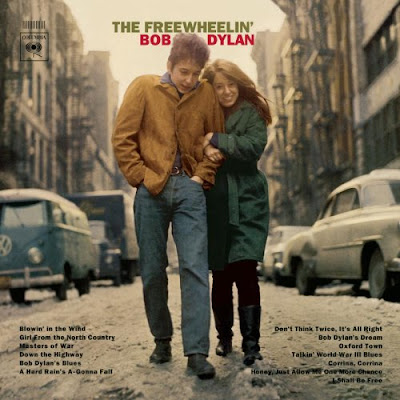
Bob Dylan's Girl from the North Country just came up on my iPod:
Please see for me if her hair hangs long,
If it rolls and flows all down her breast.
Please see for me if her hair hangs long,
That's the way I remember her best.
Bob wrote this song for Echo Helstrom , a girl he knew back in Hibbing, Minnesota, before he moved to New York.
So, now in the 21st century, what would Bob do? Would he just look up Echo's profile photo on Facebook, to instantly know how she wears her hair?
Please see for me if her hair hangs long,
If it rolls and flows all down her breast.
Please see for me if her hair hangs long,
That's the way I remember her best.
Bob wrote this song for Echo Helstrom , a girl he knew back in Hibbing, Minnesota, before he moved to New York.
So, now in the 21st century, what would Bob do? Would he just look up Echo's profile photo on Facebook, to instantly know how she wears her hair?

Thursday, 31 July 2008
Shaping the beast
Where does culture come from?
I found myself arguing on my blog that culture is a given. More specifically, that corporate cultures are deterministically shaped by underlying economics. Companies, great companies, get good at the stuff that sits in their economic core and build rich cultures that celebrate and enhance that core. Even great companies remain mediocre at pretty much everything else, and have weak, transactional cultures in non-core areas.
I have also found myself passionately arguing on my friend Vishnu Vasudev’s blog that culture is malleable. The music lovers of Madras can be trained to sit in their seats until the concert is over. There is nothing about Madras or its culture that prevents this basic courtesy from taking hold.
Do I really believe both ideas? When is culture malleable? When is it diamantine?
Rattled the options around in my head over pints of Grolsch at Canal House last evening. Came up with a list of three culture-shapers. Economics and leadership were the usual suspects. The surprise candidate, the one I like most, was design.
Incentives shaping culture is obvious, to the point of being anodyne. It probably is the one thing Marxists and Chicago school liberals will agree on. The point worth remembering is that soft incentives - prestige, tribal membership, reinforcement of identity, shame, inertia - these are often more powerful incentives than explicit money.
So, incentives work. What else? Leadership? On no other topic have have more words been expended to say less. Naw, please. Lets not bring that cheezy, nutritionally-deficient, management jargon into this blog :)
More seriously, leadership can be transformational. Authentic leadership is rare, and can be an amazing experience for both the leader and led. I'm a huge fan of what Saurav Ganguly did for the self-belief of the ~20 Indian cricketers who played under him. Saurav and John Wright really did change the culture of the Indian cricket team. Dhoni (more than Kumble or Dravid) carries the torch Saurav lit.
But, unfortunately, authentic leadership depends on personal chemistry, which doesn't scale.
In larger organizations, leaders tend to reflect cultures more than they shape them. Strong cultures are very good at self-selecting clones. At best, change-leadership in large organizations (or even nations) is about sensing the shift in the tectonic plates the organization stands on, and preparing the organization to positively respond to that shift. Those tectonic plates are mostly economic.
So incentives work on both a large and small scale. And personal leadership works, but on a small scale. What else is out there?
Design. Architecture. Physical organization. Much more interesting.
An Agile team - with business customers, systems analysts, testers, developers and the copier boy all crammed into a messy conference room - creates a culture, a vibe, which is 10x more effective than the same people with the same incentives sitting at their desks and pinging emails at each other.
A suite of offices organized around a service hub - fully equipped with printers, sofas, steaming coffee, and streaming sports coverage on a plasma screen - creates a more social and collaborative work place than a bunch of closed doors along a long corridor.
Offices with glass doors and/or big windows opening on to the corridor takes that a step further, and also reduce the risk of corruption.
Facebook's instant messenger works on the same general principle of manufacturing chance meetings. I wind up chatting with friends I was not specifically planning to call. A laptop in the kitchen means the net gets used a lot more than when a desktop sat upstairs in the study.
My first job was at Procter and Gamble in India. While I was there, P&G formalized the dress code (made ties mandatory) as part of an effort to make the culture more formal, accountable and better at completing projects in time, within budget and up to specs. The broader effort worked. The dress code change was not irrelevant.
A petting zoo under the stands at Twenty20 cricket matches makes it easier to take kids along. I was glad to have this facility at hand at Trent Bridge earlier this summer. Changes the mix of fans in the stands.
The famous broken windows theory maintains that smartening up a neighbourhood can actually reduce crime in that neighbourhood. Policing inspired by this theory is credited with a part of reduction in urban crime in America, in very serious circles.
A lot of this can, of course, be interpreted economically. A laptop in the kitchen is less costly to use, in terms of effort. Accepting a bribe in a glass office is more costly, in terms of embarrassment or risk. The dress code change sends a "signal" about what the organization now values.
But it is more fun, and perhaps more useful while planning culture change, to think about these changes as design rather than incentives changes.
I found myself arguing on my blog that culture is a given. More specifically, that corporate cultures are deterministically shaped by underlying economics. Companies, great companies, get good at the stuff that sits in their economic core and build rich cultures that celebrate and enhance that core. Even great companies remain mediocre at pretty much everything else, and have weak, transactional cultures in non-core areas.
I have also found myself passionately arguing on my friend Vishnu Vasudev’s blog that culture is malleable. The music lovers of Madras can be trained to sit in their seats until the concert is over. There is nothing about Madras or its culture that prevents this basic courtesy from taking hold.
Do I really believe both ideas? When is culture malleable? When is it diamantine?
Rattled the options around in my head over pints of Grolsch at Canal House last evening. Came up with a list of three culture-shapers. Economics and leadership were the usual suspects. The surprise candidate, the one I like most, was design.
Incentives shaping culture is obvious, to the point of being anodyne. It probably is the one thing Marxists and Chicago school liberals will agree on. The point worth remembering is that soft incentives - prestige, tribal membership, reinforcement of identity, shame, inertia - these are often more powerful incentives than explicit money.
So, incentives work. What else? Leadership? On no other topic have have more words been expended to say less. Naw, please. Lets not bring that cheezy, nutritionally-deficient, management jargon into this blog :)
More seriously, leadership can be transformational. Authentic leadership is rare, and can be an amazing experience for both the leader and led. I'm a huge fan of what Saurav Ganguly did for the self-belief of the ~20 Indian cricketers who played under him. Saurav and John Wright really did change the culture of the Indian cricket team. Dhoni (more than Kumble or Dravid) carries the torch Saurav lit.
But, unfortunately, authentic leadership depends on personal chemistry, which doesn't scale.
In larger organizations, leaders tend to reflect cultures more than they shape them. Strong cultures are very good at self-selecting clones. At best, change-leadership in large organizations (or even nations) is about sensing the shift in the tectonic plates the organization stands on, and preparing the organization to positively respond to that shift. Those tectonic plates are mostly economic.
So incentives work on both a large and small scale. And personal leadership works, but on a small scale. What else is out there?
Design. Architecture. Physical organization. Much more interesting.
An Agile team - with business customers, systems analysts, testers, developers and the copier boy all crammed into a messy conference room - creates a culture, a vibe, which is 10x more effective than the same people with the same incentives sitting at their desks and pinging emails at each other.
A suite of offices organized around a service hub - fully equipped with printers, sofas, steaming coffee, and streaming sports coverage on a plasma screen - creates a more social and collaborative work place than a bunch of closed doors along a long corridor.
Offices with glass doors and/or big windows opening on to the corridor takes that a step further, and also reduce the risk of corruption.
Facebook's instant messenger works on the same general principle of manufacturing chance meetings. I wind up chatting with friends I was not specifically planning to call. A laptop in the kitchen means the net gets used a lot more than when a desktop sat upstairs in the study.
My first job was at Procter and Gamble in India. While I was there, P&G formalized the dress code (made ties mandatory) as part of an effort to make the culture more formal, accountable and better at completing projects in time, within budget and up to specs. The broader effort worked. The dress code change was not irrelevant.
A petting zoo under the stands at Twenty20 cricket matches makes it easier to take kids along. I was glad to have this facility at hand at Trent Bridge earlier this summer. Changes the mix of fans in the stands.
The famous broken windows theory maintains that smartening up a neighbourhood can actually reduce crime in that neighbourhood. Policing inspired by this theory is credited with a part of reduction in urban crime in America, in very serious circles.
A lot of this can, of course, be interpreted economically. A laptop in the kitchen is less costly to use, in terms of effort. Accepting a bribe in a glass office is more costly, in terms of embarrassment or risk. The dress code change sends a "signal" about what the organization now values.
But it is more fun, and perhaps more useful while planning culture change, to think about these changes as design rather than incentives changes.
Tuesday, 29 July 2008
Time for thought
A private conversation between Barack Obama and David Cameron picked up by accident on an ABC microphone:
Cameron: Do you have a break at all?
Obama: Actually, the most important thing you need to do is to have big chunks of time during the day when all you're doing is thinking...The biggest mistake a lot of folks make is just feeling as if you have to be...
Cameron: These guys just chalk up your diary
Obama: Right. In 15 minute increments...
Cameron: We call it the dentist's waiting room. You have to scrap that...you've got to have time
Obama: And...well you start making mistake, or you lose the big picture, or you lose a sense of, I think you lose a feel...
Cameron: Your feeling. And this is exactly what politics is all about. The judgment you bring to making decisions.
It is not universal. I find it hard to imagine Hillary Clinton living by this ethic of reflective thought rather than just working harder. Maybe Hillary would have been better off with a less packed schedule and more time for thought.
For my money, this might be the best management advice I've ever had.
Cameron: Do you have a break at all?
Obama: Actually, the most important thing you need to do is to have big chunks of time during the day when all you're doing is thinking...The biggest mistake a lot of folks make is just feeling as if you have to be...
Cameron: These guys just chalk up your diary
Obama: Right. In 15 minute increments...
Cameron: We call it the dentist's waiting room. You have to scrap that...you've got to have time
Obama: And...well you start making mistake, or you lose the big picture, or you lose a sense of, I think you lose a feel...
Cameron: Your feeling. And this is exactly what politics is all about. The judgment you bring to making decisions.
It is not universal. I find it hard to imagine Hillary Clinton living by this ethic of reflective thought rather than just working harder. Maybe Hillary would have been better off with a less packed schedule and more time for thought.
For my money, this might be the best management advice I've ever had.
Sunday, 27 July 2008
Scrabulous scandal
Start with first principles.
Intellectual property right (IPR) laws exist to increase the stock of knowledge in the public domain. Giving innovators a time-bound monopoly hurts the public interest in the short term. But it helps the public interest in the long term, by increasing the rewards on innovation.
Notice that the argument works only if the knowledge created actually filters into the public domain. The argument might work in pharmaceuticals. Patented drugs do become generics in fifteen years.
This is totally not working in media/ entertainment. Private businesses seem to have a lock on media/ entertainment properties pretty much in perpetuity, to a point where I simply can't believe that the public interest is being served.
Take the latest absurd scandal . A company called Hasbro claims to own rights to Scrabble. They therefore claim that the boys who developed the Scrabulous application are violating Hasbro's copyright.
Let's even assume that the corporate lawyers have their papers in order. Where is the moral case here? Scrabble was invented in 1931. Why is this game not in the public domain 77 years after it was invented?
To make this situation even more absurd, Scrabulous is not a knock-off. It is a real value added innovation.
There are any number of small businesses which will print and sell the old off-line Scrabble without paying Hasbro royalties. Seems reasonable that they shouldn't have the right to print and market zero-royalty copies for 15 years. Feels like even the argument breaks down somewhere between 15.01 and 77, but there is an argument.
But with a true innovation - one that delivers massive amounts of additional value to at least some end users - isn't that what IPR laws are meant to be enabling? And these same IPR laws are now being used to prevent such innovation? This is a system that has been perverted to the point of absurdity.
Separately, the business executive in me can't help spotting mutual interest.
I suspect the Agarwala brothers would not be averse to an appropriately valued buy-out. Nothing at all wrong with a buyout. Reminds me of a pitch-your-business-idea-to-venture-capital competition when I was at B-school. Six out of eight teams' exit strategy was to sell out to Microsoft. All that may be going on here is legal posturing by Hasbro to scare the developers into accepting a lower price.
It's just a shame that laws that were initially written to serve the public interest can be used to create the opposite of what was intended.
Intellectual property right (IPR) laws exist to increase the stock of knowledge in the public domain. Giving innovators a time-bound monopoly hurts the public interest in the short term. But it helps the public interest in the long term, by increasing the rewards on innovation.
Notice that the argument works only if the knowledge created actually filters into the public domain. The argument might work in pharmaceuticals. Patented drugs do become generics in fifteen years.
This is totally not working in media/ entertainment. Private businesses seem to have a lock on media/ entertainment properties pretty much in perpetuity, to a point where I simply can't believe that the public interest is being served.
Take the latest absurd scandal . A company called Hasbro claims to own rights to Scrabble. They therefore claim that the boys who developed the Scrabulous application are violating Hasbro's copyright.
Let's even assume that the corporate lawyers have their papers in order. Where is the moral case here? Scrabble was invented in 1931. Why is this game not in the public domain 77 years after it was invented?
To make this situation even more absurd, Scrabulous is not a knock-off. It is a real value added innovation.
There are any number of small businesses which will print and sell the old off-line Scrabble without paying Hasbro royalties. Seems reasonable that they shouldn't have the right to print and market zero-royalty copies for 15 years. Feels like even the argument breaks down somewhere between 15.01 and 77, but there is an argument.
But with a true innovation - one that delivers massive amounts of additional value to at least some end users - isn't that what IPR laws are meant to be enabling? And these same IPR laws are now being used to prevent such innovation? This is a system that has been perverted to the point of absurdity.
Separately, the business executive in me can't help spotting mutual interest.
I suspect the Agarwala brothers would not be averse to an appropriately valued buy-out. Nothing at all wrong with a buyout. Reminds me of a pitch-your-business-idea-to-venture-capital competition when I was at B-school. Six out of eight teams' exit strategy was to sell out to Microsoft. All that may be going on here is legal posturing by Hasbro to scare the developers into accepting a lower price.
It's just a shame that laws that were initially written to serve the public interest can be used to create the opposite of what was intended.
Thursday, 24 July 2008
Lesbians, Scotch, Tigers and Identity
Three residents of the Greek island Lesbos moved the courts to ban the rule of the word lesbian to describe gay women. Apparently, there once was a time when lesbian used to mean someone from Lesbos.
Does capitalization - a lesbian Lesbian is a lesbian from Lesbos - sufficiently distinguish the two meanings? It does sometimes work. Someone who welshes on a deal is not necessarily Welsh. But sometimes it doesn't. JK Galbraith lamented that the word Scotch once used to describe people from Scotland.
I've personally run into a more reversible (hopefully) but more scary identity blurring: when I tell non-Indians that I am a Tamil, their first association is with the Tamil Tigers.
The greatest thing about the English language is that it has no language police, no notion of the One True English. Shape-shifting words can't be legislated out of the lexicon. Would the French language police have upheld the Lesbian's objections?
Note (following my lawyer brother-in-law's shock at some of my previous posts): I am a staunch supporter of gay and lesbian rights...and have no specific views on British sub-national identities. No offense meant to anyone
Does capitalization - a lesbian Lesbian is a lesbian from Lesbos - sufficiently distinguish the two meanings? It does sometimes work. Someone who welshes on a deal is not necessarily Welsh. But sometimes it doesn't. JK Galbraith lamented that the word Scotch once used to describe people from Scotland.
I've personally run into a more reversible (hopefully) but more scary identity blurring: when I tell non-Indians that I am a Tamil, their first association is with the Tamil Tigers.
The greatest thing about the English language is that it has no language police, no notion of the One True English. Shape-shifting words can't be legislated out of the lexicon. Would the French language police have upheld the Lesbian's objections?
Note (following my lawyer brother-in-law's shock at some of my previous posts): I am a staunch supporter of gay and lesbian rights...and have no specific views on British sub-national identities. No offense meant to anyone
Saturday, 19 July 2008
Fun days, summer balls, team spirit and all that jazz
I'm seriously back-logged at work after a day out water skiing, a night out camping and a night out for the summer ball...all company events. Got to spend lots of time out soaking up the glorious English summer, and to reflect on corporate fun events and how they work.
- Conclusions first. My top management tip. Spend the money, create the time, and make sure your team does lots of fun stuff together. The return you get in terms of morale and productivity (less time wasted on whingeing/ managing the whinge) is huge
- The cricketing parallel...more games are won in the dressing room than on the field
- Things I remember doing on Fun Days include, in no particular order: water-skiing, white water rafting, yatching, steering a canal boat, camping, ultimate frizbee, fishing, mini-golf, tennis ball cricket, baseball hitting in batting cages, softball, bowling, skiing, laser tag, rock climbing, a ropes course, hiking up Snowdon (the highest peak in Britain), hiking up Scafell Pike (the highest peak in England), quad bike racing, go karting, a treasure hunt through the "heart of rural England", archery, ice-skating, clay pigeon shooting, visiting an aquarium, visiting ESPN Zone, visiting an amusement park with many roller coaster rides, and wine tasting
- This does not include Community Days, which might involve riding a bicycle 75 miles across the Pennines, building a house for Habitat for Humanity, or painting the hall of an inner city school
- Fun Days are fun despite being hopelessly bad at the fun activity. This is less obvious than it sounds. Games I play regularly, like squash, are fun when I'm playing well and no fun when I'm playing badly
- The Fun Day is mainly about being out with the blokes from work, and not talking work. The activity is just time structuring
- The hardest thing about fun days is being inclusive. The activities I've listed above reflect the culture of the teams I work in...mainly quant jocks in their 20s. The teams are very diverse in terms of ethnicity/ race/ nationality, but are very homogeneous in attitudes/ interests/ mind-set. I remember a gentle, soft spoken girl who decided to make herself unavailable for white water rafting because she couldn't quite picture herself in a wet suit. That didn't feel right
- Twenty20 cricket games don't qualify as official Fun Days, because they are not inclusive enough
- It's impossible to be completely inclusive. Our most feminine fun events are probably the Summer and Winter Balls. These tend to involve nice clothes, stately homes, fine food and wine, live entertainers or fireworks, karaoke, an open bar and disco dancing. A shaven-headed Australian Vice President in his mid-forties consistently boycotts these evenings, since he "doesn't want to watch 23 year olds getting wasted and throwing up in the toilets". In case you're wondering, I've never seen or even heard of anyone throwing up in toilets at company events
- Fun Days have no impact on the number/ quality of people who apply for jobs at this company. Potential recruits, especially graduates, care a lot more about pay, prestige and career prospects than fun or culture
- Fun Days, and the broader culture that they are a part of, are great for retention. Culture is a big part of what people like about their jobs here. It is a key reason why people who leave want to (and often do) come back. People leaving and coming back...and the incentive that creates to leave on a whim...is a topic for another post
- The disconnect between the selection effect and the retention effect is quite an interesting puzzle, really. When asked, graduates say they want "serious" jobs. Join us because we do cool Fun Days sounds condescending. That apart, there are at least three other interesting economic effects going on here:
(i) Competition. Other employers competing for the same talent also do Fun Days
(ii) Asymmetric information. Everybody says their company is fun. But is it? Really? An extra $5000 is real for sure
(iii) Consumer choice theory. People are really bad at forecasting what they enjoy/ care about/ derive utility from. They overestimate the utility of obscure features while evaluating digital cameras. Similarly, they underestimate the utility derived from fun or culture in evaluating potential employers.
- Conclusions first. My top management tip. Spend the money, create the time, and make sure your team does lots of fun stuff together. The return you get in terms of morale and productivity (less time wasted on whingeing/ managing the whinge) is huge
- The cricketing parallel...more games are won in the dressing room than on the field
- Things I remember doing on Fun Days include, in no particular order: water-skiing, white water rafting, yatching, steering a canal boat, camping, ultimate frizbee, fishing, mini-golf, tennis ball cricket, baseball hitting in batting cages, softball, bowling, skiing, laser tag, rock climbing, a ropes course, hiking up Snowdon (the highest peak in Britain), hiking up Scafell Pike (the highest peak in England), quad bike racing, go karting, a treasure hunt through the "heart of rural England", archery, ice-skating, clay pigeon shooting, visiting an aquarium, visiting ESPN Zone, visiting an amusement park with many roller coaster rides, and wine tasting
- This does not include Community Days, which might involve riding a bicycle 75 miles across the Pennines, building a house for Habitat for Humanity, or painting the hall of an inner city school
- Fun Days are fun despite being hopelessly bad at the fun activity. This is less obvious than it sounds. Games I play regularly, like squash, are fun when I'm playing well and no fun when I'm playing badly
- The Fun Day is mainly about being out with the blokes from work, and not talking work. The activity is just time structuring
- The hardest thing about fun days is being inclusive. The activities I've listed above reflect the culture of the teams I work in...mainly quant jocks in their 20s. The teams are very diverse in terms of ethnicity/ race/ nationality, but are very homogeneous in attitudes/ interests/ mind-set. I remember a gentle, soft spoken girl who decided to make herself unavailable for white water rafting because she couldn't quite picture herself in a wet suit. That didn't feel right
- Twenty20 cricket games don't qualify as official Fun Days, because they are not inclusive enough
- It's impossible to be completely inclusive. Our most feminine fun events are probably the Summer and Winter Balls. These tend to involve nice clothes, stately homes, fine food and wine, live entertainers or fireworks, karaoke, an open bar and disco dancing. A shaven-headed Australian Vice President in his mid-forties consistently boycotts these evenings, since he "doesn't want to watch 23 year olds getting wasted and throwing up in the toilets". In case you're wondering, I've never seen or even heard of anyone throwing up in toilets at company events
- Fun Days have no impact on the number/ quality of people who apply for jobs at this company. Potential recruits, especially graduates, care a lot more about pay, prestige and career prospects than fun or culture
- Fun Days, and the broader culture that they are a part of, are great for retention. Culture is a big part of what people like about their jobs here. It is a key reason why people who leave want to (and often do) come back. People leaving and coming back...and the incentive that creates to leave on a whim...is a topic for another post
- The disconnect between the selection effect and the retention effect is quite an interesting puzzle, really. When asked, graduates say they want "serious" jobs. Join us because we do cool Fun Days sounds condescending. That apart, there are at least three other interesting economic effects going on here:
(i) Competition. Other employers competing for the same talent also do Fun Days
(ii) Asymmetric information. Everybody says their company is fun. But is it? Really? An extra $5000 is real for sure
(iii) Consumer choice theory. People are really bad at forecasting what they enjoy/ care about/ derive utility from. They overestimate the utility of obscure features while evaluating digital cameras. Similarly, they underestimate the utility derived from fun or culture in evaluating potential employers.
Saturday, 12 July 2008
Sunday, 6 July 2008
Tired cricketers?
The new news from the Asia Cup has been about players being too tired to give 100%.
The players have a point. Back-to-back 50 over games in Karachi in June is insane. The media has a point. There is too much international cricket. And some of the scheduling is just incompetent.
What is not being discussed is a credible way out of this mess. There will be no mystic return-to-innocence of less cricket. More cricket means more money. That is good. The real solution is to find techniques that allow players to remain fresh despite the intense year-round schedule.
A simple technique we could import from baseball is rotation. It is unthinkable that New York Yankees starting pitcher would pitch two games in a row, even in the World Series. Why should Ishant Sharma or RP Singh risk career limiting injuries by opening the bowling two days in a row?
Pick a squad of 25. Make sure the fast bowlers and the batters who have played long innings get a rest between games. Cricket's stars deserve careers like Sachin Tendulkar or Shane Warne. We don't want them to retire at 25 like a Justine Henin.
The players have a point. Back-to-back 50 over games in Karachi in June is insane. The media has a point. There is too much international cricket. And some of the scheduling is just incompetent.
What is not being discussed is a credible way out of this mess. There will be no mystic return-to-innocence of less cricket. More cricket means more money. That is good. The real solution is to find techniques that allow players to remain fresh despite the intense year-round schedule.
A simple technique we could import from baseball is rotation. It is unthinkable that New York Yankees starting pitcher would pitch two games in a row, even in the World Series. Why should Ishant Sharma or RP Singh risk career limiting injuries by opening the bowling two days in a row?
Pick a squad of 25. Make sure the fast bowlers and the batters who have played long innings get a rest between games. Cricket's stars deserve careers like Sachin Tendulkar or Shane Warne. We don't want them to retire at 25 like a Justine Henin.
Thursday, 3 July 2008
Leos suffer from weak digestion. They do, don't they?
Great old story from the Economist about a very common statistical error. Cherry picking.
Hospital admission data from Canada shows that Leos are likely to have gastric trouble and Sagittarians are more likely to break their arms. Both results are statistically significant...if your statistical technique ignores the fact that with 24 comparisons 2-3 are likely to be significant at the 95% level due to pure randomness.
I unconsciously resisted absorbing this idea during stats training...probably because I'm usually very keen for the results of my tests to be significant. Yet when one is doing dozens of tests (as I often am) results that appear significant are often just noise.
This example hammered the point home...probably because I am very receptive to the thought that astrology is a vicious scam. Cultural context: astrology in India isn't just harmless fun. The truth is that Leos are no more likely than anyone else to have gastric trouble. And my mom's painful feet are because of poorly designed footwear, not her Virgo birth sign.
Hospital admission data from Canada shows that Leos are likely to have gastric trouble and Sagittarians are more likely to break their arms. Both results are statistically significant...if your statistical technique ignores the fact that with 24 comparisons 2-3 are likely to be significant at the 95% level due to pure randomness.
I unconsciously resisted absorbing this idea during stats training...probably because I'm usually very keen for the results of my tests to be significant. Yet when one is doing dozens of tests (as I often am) results that appear significant are often just noise.
This example hammered the point home...probably because I am very receptive to the thought that astrology is a vicious scam. Cultural context: astrology in India isn't just harmless fun. The truth is that Leos are no more likely than anyone else to have gastric trouble. And my mom's painful feet are because of poorly designed footwear, not her Virgo birth sign.
Saturday, 28 June 2008
Scrabulous vs Scrabble
Five reasons I like Scrabulous more than Scrabble.
- I can check the official word list quickly and easily. This levels the playing field a bit when a beginner like me who was never very good with spelling is playing old pros like my sister
- I don't need to do the arithmetic to work out how much a word is worth
- I can play with family and friends who live on different continents
- I can complete games with my wife. We almost never have blocks of time big enough for a whole game. Leaving the board in place is not an option in a house with two kids
- I can make a move between meetings to break up a work day
- I can check the official word list quickly and easily. This levels the playing field a bit when a beginner like me who was never very good with spelling is playing old pros like my sister
- I don't need to do the arithmetic to work out how much a word is worth
- I can play with family and friends who live on different continents
- I can complete games with my wife. We almost never have blocks of time big enough for a whole game. Leaving the board in place is not an option in a house with two kids
- I can make a move between meetings to break up a work day
Paris je t'aime
Great fun.
18 clips about love in Paris. By different directors, about different aspects of love, set in different parts of Paris. United only by the spirit of the city, which permeates every clip. Sounds a bit like a film school project. Very cool project.
Each film clip works a poem. Not a novel. There isn’t enough room to establish a character or situation.
Yet, no richness is lost. These are like re-enactments from the Ramayana. Each character, each situation in a love story has been worn so smooth with repetition that one can step right into the narrative without needing to find bearings.
18 clips about love in Paris. By different directors, about different aspects of love, set in different parts of Paris. United only by the spirit of the city, which permeates every clip. Sounds a bit like a film school project. Very cool project.
Each film clip works a poem. Not a novel. There isn’t enough room to establish a character or situation.
Yet, no richness is lost. These are like re-enactments from the Ramayana. Each character, each situation in a love story has been worn so smooth with repetition that one can step right into the narrative without needing to find bearings.
Wednesday, 25 June 2008
Tuesday, 24 June 2008
Geeks, meet the jocks
Michael Medved on the value of an education:
That piece of parchment from New Haven or Cambridge does indicate that you've competed with single-minded effectiveness in the first 20 years of life....the driven, ferociously focused kids willing to expend the energy and make the sacrifices to conquer our most exclusive universities...are likely to enjoy similar success...
Competed, single-minded, driven, ferociously focused, energy, sacrifice - these words could be used to describe sports people. Not gifted amateurs, but the tough competitors who win ugly.
Among my peers, the sportsmen/ games captains have certainly gone on to be as successful as the university toppers. There is something in that old Thomas Arnold belief about sport building character...
That piece of parchment from New Haven or Cambridge does indicate that you've competed with single-minded effectiveness in the first 20 years of life....the driven, ferociously focused kids willing to expend the energy and make the sacrifices to conquer our most exclusive universities...are likely to enjoy similar success...
Competed, single-minded, driven, ferociously focused, energy, sacrifice - these words could be used to describe sports people. Not gifted amateurs, but the tough competitors who win ugly.
Among my peers, the sportsmen/ games captains have certainly gone on to be as successful as the university toppers. There is something in that old Thomas Arnold belief about sport building character...
Saturday, 21 June 2008
Culture is a Beast
Tigers hunt alone. They stalk their prey through dense jungle, relying first on stealth and then on a burst of incredible power. Wolves hunt in packs. They chase their prey down through open terrain, encircle, harass and exhaust their prey, before killing and feeding as a pack. The social organization of animals, their cultures, are determined by their survival strategy. Animals evolve to do what it takes to get food without becoming food.
Tigers don’t stomp. Wolves don’t graze…even if they are made to sit through a thousand PowerPoint presentations.
Organizations are like animals. They evolve to do what is necessary for their survival, and very little else.
All that is obvious, right? Apparently not. The alchemy of “leadership”, armed with the sword of PowerPoint, can transform organizations into the object of the heart’s desire…never mind how the organization actually makes money.
My top management tip: beware the man in the Armani suit who teaches the elephant to be stealthy.
Or teaches the snake to fly. Hey…a snake who learns to fly is a dragon. That’s the metaphor which will super-charge my next change management program.
Tigers don’t stomp. Wolves don’t graze…even if they are made to sit through a thousand PowerPoint presentations.
Organizations are like animals. They evolve to do what is necessary for their survival, and very little else.
All that is obvious, right? Apparently not. The alchemy of “leadership”, armed with the sword of PowerPoint, can transform organizations into the object of the heart’s desire…never mind how the organization actually makes money.
My top management tip: beware the man in the Armani suit who teaches the elephant to be stealthy.
Or teaches the snake to fly. Hey…a snake who learns to fly is a dragon. That’s the metaphor which will super-charge my next change management program.
Friday, 13 June 2008
Attack of the Asian female clones
Glorious giants of the Appalachians are being killed off by insignificant-looking Asian females. And this has nothing to do with outsourcing, job losses, small towns, bitterness, guns or religion.
The Eastern Hemlock, a glorious native American tree that grows to a stature of 100m, the Sequoia of the Appalachians, is being wiped out by a tiny parasite, an aphid called the Woolly Adelgid. This has been observed and mourned in the New Yorker (I found the story thumbing through a back issue), the New York Times (way back in 1991) and in various pamphlets accessible with a Google search. However, what doesn't seem to have attracted comment is that the attacker is fatally flawed.
The aphids first came to America on decorative Japanese trees which were planted at Maymont, a public park in Richmond, VA. All the male aphids died. They feed exclusively on spruce sap and the males could not digest American spruce. A few females survived. Sans males, they had to reproduce by cloning. So, the threat to the Eastern Hemlock comes from clones of a very small number of individual female aphids. The clones were fantastically successful because they could colonize the Eastern Hemlock. As a predator gets established in America, or worst-case, as the Hemlock populations in the wild die out, the clones will also die. Clones are evolutionary dead-ends.
Should conservationists freeze Hemlock gene-plasm to re-populate the Applachians once the Woolly Adenids clones inevitably die? Makes sense. Just be sure to freeze a diverse pool of Hemlock gene-plasm. And establish an Eastern Hemlock worshipping cult whose rituals will remind initiates to perform this sacred task when evolution plays out and the clones finally die.
The Eastern Hemlock, a glorious native American tree that grows to a stature of 100m, the Sequoia of the Appalachians, is being wiped out by a tiny parasite, an aphid called the Woolly Adelgid. This has been observed and mourned in the New Yorker (I found the story thumbing through a back issue), the New York Times (way back in 1991) and in various pamphlets accessible with a Google search. However, what doesn't seem to have attracted comment is that the attacker is fatally flawed.
The aphids first came to America on decorative Japanese trees which were planted at Maymont, a public park in Richmond, VA. All the male aphids died. They feed exclusively on spruce sap and the males could not digest American spruce. A few females survived. Sans males, they had to reproduce by cloning. So, the threat to the Eastern Hemlock comes from clones of a very small number of individual female aphids. The clones were fantastically successful because they could colonize the Eastern Hemlock. As a predator gets established in America, or worst-case, as the Hemlock populations in the wild die out, the clones will also die. Clones are evolutionary dead-ends.
Should conservationists freeze Hemlock gene-plasm to re-populate the Applachians once the Woolly Adenids clones inevitably die? Makes sense. Just be sure to freeze a diverse pool of Hemlock gene-plasm. And establish an Eastern Hemlock worshipping cult whose rituals will remind initiates to perform this sacred task when evolution plays out and the clones finally die.
Sunday, 8 June 2008
Test cricket. Live at the ground
Five thoughts after a day watching test cricket at Trent Bridge:
1. The thonchk sound of bat hitting ball. That sound just doesn't come through on TV
2. The new TV screen at Trent Bridge is fantastic. Watching from a stand 150 meters from the screen, the picture quality is as good as on TV at home. They do show the key moments on screen. Makes the classic (expensive) seats over the top of the bowler's arm less relevant, really
3. They market special radios on the ground that pick up Sky Sports' TV commentary. They ought to also market special internet devices that pick up The Guardian's OBO coverage
4. The English start drinking at 11:00 am and drink continuously till stumps at 6:30. Men and women, white haired gentlemen in blazers and yobs in tattoos...they all sustain this rate of consumption. It is an amazing physical achievement. Even more amazing, Britain is ranked only 15th in European league tables for alcohol consumption per capita
5. Monty Panesar does a cool wave to the crowd. His back is towards the crowd, but he acknowledges the "Monty, give us a wave" calls by transferring his weight on to one leg, pivoting his hands at about waist height, shrugging a shoulder and just glancing back for a split second
1. The thonchk sound of bat hitting ball. That sound just doesn't come through on TV
2. The new TV screen at Trent Bridge is fantastic. Watching from a stand 150 meters from the screen, the picture quality is as good as on TV at home. They do show the key moments on screen. Makes the classic (expensive) seats over the top of the bowler's arm less relevant, really
3. They market special radios on the ground that pick up Sky Sports' TV commentary. They ought to also market special internet devices that pick up The Guardian's OBO coverage
4. The English start drinking at 11:00 am and drink continuously till stumps at 6:30. Men and women, white haired gentlemen in blazers and yobs in tattoos...they all sustain this rate of consumption. It is an amazing physical achievement. Even more amazing, Britain is ranked only 15th in European league tables for alcohol consumption per capita
5. Monty Panesar does a cool wave to the crowd. His back is towards the crowd, but he acknowledges the "Monty, give us a wave" calls by transferring his weight on to one leg, pivoting his hands at about waist height, shrugging a shoulder and just glancing back for a split second
Subscribe to:
Comments (Atom)